Secondhand Compliments

basketball b in paper

Brendan, about to score the game-winning shot at the buzzer

By Kathy P. Behan

“He shoots, he scores!”

The crowd goes wild and several people slap me on the back. Of course, even though they’re congratulating me, it was one of rny children who just scored the winning basket. I had nothing to do with it.

Even though it happens all the time I feel funny accepting secondhand compliments. As parents, how can we possibly take credit for our kids’ accomplishments? After all, it was their own skill and hard work that made them successful. Are we even partially responsible?

Frankly, my kids are good athletes despite being handicapped by their maternal pedigree. For me, the fact that they’re well coordinated comes with a deep sense of pride, and a good bit of irony. After all, I’m from a family of, to put it kindly, non-athletes. I do have to say that we looked pretty good in our sports apparel, but looking the part and “playing” the part are totally different.

Aside from my dad, I grew up in an all female household that luckily for us, prized brain over brawn. My parents did their part though, gamely trying to promote healthy activities. They encouraged us to play golf and would sign us up for swimming lessons and sports.

In one particularly memorable instance, my mother desperately tried to motivate my younger sister in basketball, by offering her $5 for every basket she made. My sister scored her all-time high that game — two baskets.

For me, the good news was that I could beat my sisters at almost anything. Compared to my siblings, I looked like a sports goddess. I could also beat all the kids in the neighborhood — at least the ones who were significantly younger than me — at badminton. I also got pretty darn good at ping pong, but these weren’t exactly big-time sports.

Fast forward a bunch of years. My kids started to display athletic prowess right from the start. They sat, crawled and walked at remarkably young  ages, and have been making great athletic strides ever since.

It turned out they were good at almost every sport they attempted, right from the get-go. Besides being well coordinated, they learned rules quickly, and seemed to have an innate sense of the best place for them to be on the field, or on the ice. More importantly, they didn’t take their talent for granted. They worked hard to improve their skills.

As I watched them play their various sports, I was confused, but dazzled. How could these people be related to me?

And then it dawned on me. These children weren’t only related to me, their dad had something to do with their creation. And frankly, he’s pretty special. Besides being a Harvard graduate, he was also an award-winning, three-sport varsity athlete.

So even though I feel a bit guilty about it, I probably should be congratulated. Even though I’m not the one who scored, I do deserve some credit. Now that I think about it, I was a big contributor to my children’s success. After all, I gave birth to them, and more importantly, I did give them an amazing dad.

Kathy P. Behan, a mother of three, is a freelance writer specializing in health and family issues. 

Babysitters Provide An Important Service

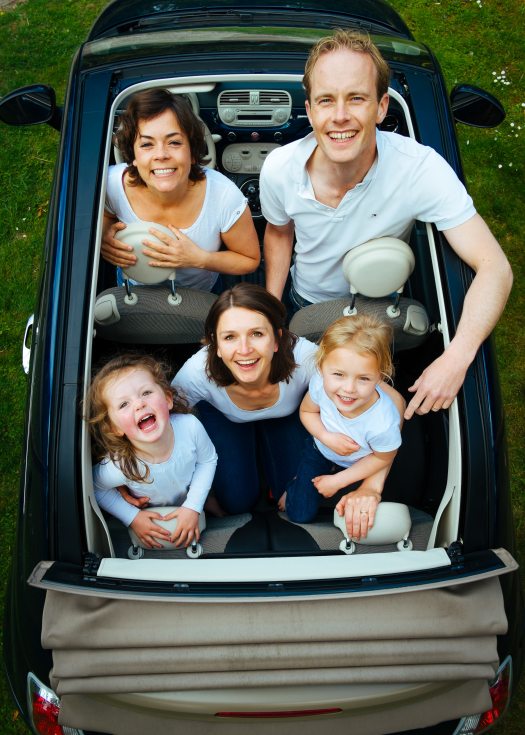
car-children-dad-8509BY KATHY P. BEHAN

Over the years, we’ve had lots of babysitters for our three kids, and truly, most of them have been terrific. There’s one in particular who’s almost part of our family. She’s known and cared for our children ever since two of them were born. She genuinely cares for my kids, and that’s probably why they in turn, like her so much. (I’d mention her name only I selfishly want to keep her for myself!)

We’ve had other good sitters as well. Teenage girls and boys, who have also been conscientious and wonderful. They’ve managed to engage the kids in constructive, fun and imaginative pursuits. And even though my children can give any experienced mother a run for their money, the sitters have been able to handle the kids like pros.

In the good old days we didn’t need babysitters. We lived in New York, and my parents and other relatives would watch our son (the only child we had at the time). My mother would actually call us up on Saturday nights and say, “I’m coming over to watch Cullen. Where do you two want to go tonight?” And of course, my husband and I would happily go out on the spur of the moment, knowing that our sweet boy was well taken care of.

Our first non-family babysitting experience occurred on a house-hunting trip to Massachusetts six years ago. We were staying with my husband’s brother, his wife and young daughter. Our hosts suggested going out for dinner, and had lined up one of their regular sitters. Though this was going to be the first time we would be leaving our 18-month-old son with a “real” babysitter, I didn’t have strong qualms about it. After all, we were going to a restaurant nearby and would only be gone for about two hours.

Before we left, I carefully explained my son’s bedtime routine, and added, “He’s been really difficult to put to sleep lately, so it might be easiest to just let him stay up until we get back. Especially since he had such a late nap this afternoon.” The sitter nodded her head in understanding, and we said good night to the kids and left.

When we returned two hours later, the sitter was on the phone, and Cullen wasn’t in the playpen or family room. She abruptly ended her phone conversation, and explained, “Oh, he started crying right after you left, so I put him to bed.”

With a sinking heart, I started up the stairs for the guest room and found our son bright pink, and sweat-covered in the crib. He had obviously been crying for a long time, and even though he was asleep, there was still a sobbing catch in his breath. I’m sure you can imagine how I felt. Her treatment of my baby was incomprehensible. I ended up saying nothing about this incident to my in-law’s, and their sitter. To this day, I’m still haunted by my silence.

We’ve had other problems with caregivers. For example, one sat my daughter, who was 6 months old at the time, on the couch. Not surprisingly, minutes later Taryn tumbled onto the floor, landing on her head. I only know this because my second son reported it to me after the girl had left (and the large lump on Taryn’s head verified Brendan’s story). Then there was the time that I specifically told a sitter not to let my sons watch TV. She not only disregarded my wishes, she barely waited for my car to leave the driveway before doing so.

All of these experiences, good and bad, have taught us some valuable lessons. We’ve learned that parents are in partnership with the people who take care of their kids. In order to best help them do their job, they need information. For instance, tell them where you’re going. When you’ll be back. Make sure to write out the phone number of where you can be reached, your cell phone numbers, as well as the numbers for the pediatrician, fire and police departments. Also, leave the sitter your home phone number and address. In an emergency, a flustered caregiver may not be able to remember exactly where she is.

She also needs to know what you expect from her. Do you need her to feed, bathe or put the kids to bed? Tell her a little bit about your kids, including, what they’re allowed (or not allowed) to eat, whether it’s OK if they watch TV, when they should go to sleep, and if they have any bedtime rituals, etc. One of my friends even leaves detailed lists of what her kids like to do, and what distractions to try if her baby cries.

Speaking of babies, briefly go over the child’s developmental stage with the sitter. A teen-ager might not realize that you need to support an infant’s head when you lift him. Or that most 6-month-olds can’t sit unsupported, or that 19-month-olds will put anything small into their mouths.

It’s also important that you treat a babysitter with consideration and respect. She’s not a servant, and shouldn’t be expected to perform non-child related tasks. Plus, it pays to get to know the caregiver, and to establish some kind of rapport. You’ll be able to learn more about her, and it’ll help her to like you. And after all, if you and your kids want her to come back, she’ll be more inclined to do so if she likes you.

How do you know if a sitter is good? There’s no sure fire way, but for starters, get some recommendations from friends. They can give you the names of their favorites. Then, give the sitter a dry run. Try him or her out for a few hours while you remain in the house. Keep tabs on what they’re doing with the kids. Do they play with them, or simply watch them? How do they behave if the kids misbehave? Do they seem to enjoy being with children, or are they simply enduring them? By the way, with sitters, older doesn’t necessarily mean better. We’ve had eighth- and ninth-graders who were great. What they lack in experience, is often made up for in interest and enthusiasm. And older sitters often have more social, school or work conflicts, so they may not be available as often.

You may also want to do what I do, train your kids to be squealers. After the sitter leaves, I quiz my kids at length about what went on in my absence. Even allowing for some exaggeration, my children have become pretty reliable and accurate spies.

The bottom line is that chances are, you’re going to have to use a sitter at one time or another. With a little research, you can find someone your kids like and whom you can trust. And isn’t that worth a little extra effort?

Kathy P. Behan, a mother of three, is a nationally published freelance writer, specializing in health and family issues.


Preparation Is Good Medicine

bright-cardiac-cardiology-433267By Kathy P. Behan

The memory is as vivid now as when it actually  happened. We were eating lunch at one of our regular fast-food places. My husband and I sorted through the bags, and divvied up the food between ourselves and our two sons. As usual, I broke my younger son’s chicken into pieces, set up his milk — and hid the French fries for later.

After a few minutes, I glanced over at Brendan, who was about 20 months old at the time. My heart nearly stopped. He was choking. Even though his mouth was wide open, he couldn’t make a sound. His eyes clearly conveyed shock and alarm. I yelled out my husband’s name, and tried unsuccessfully to dislodge the chicken with my finger, but it was too firmly wedged in his throat.

Pat quickly pulled Brendan from his high chair, turned him over and while supporting his stomach with one hand, he tapped the other against his back. The chicken shot out of Brendan’s mouth, and he began to cry.

Even though our son quickly recovered from this ordeal, it was hours before our own breathing and heart rates returned to normal. In some ways, my husband and I will never get over this experience. We still have flashbacks about it. My younger son is alive today because of the quick actions taken by his father. I don’t let myself think about what would have happened if we had been there without him.

Just a few weeks earlier, Pat’s company had offered a CPR and emergency first-aid course. He had volunteered to be the representative from his floor.

It’s probably obvious why I’m telling you all this. Life is unpredictable. And life with children, though infinitely precious, is also extremely precarious. Kids seem to have a natural affinity for disaster. The good news is that even though they’re constantly flirting with danger, by pure luck, they usually manage to avoid it. The bad news is that parental vigilance alone isn’t always enough to keep our children safe. Much as we’d like to, we just can’t protect our children from all of life’s hazards. And what happens then? Would you know what to do if your child was choking? Or bleeding excessively? Or unconscious?

It’s ironic that we spend so much time taking Lamaze classes and preparing for the birth of our children, and yet, so little time learning how to keep them alive. Much as we don’t even want to consider it, especially as parents, we have to be prepared to cope with medical emergencies. That’s why I’ve enrolled in an infant and child CPR and choke-saver class, and I urge you to do the same. Courses are offered by many area schools and local hospitals.

If the unthinkable happens, some medical training is invaluable.

Kathy P. Behan, a mother of three, is a nationally published freelance writer, specializing in health and family issues.

Kids Can Make or Break a Vacation

beach-children-family-39691

By Kathy P. Behan

For years, my husband and I have advocated separate vacations. But the kids keep finding us.

–Erma Bombeck

Vacation. They’ve got to come up with a different word. It’s certainly not a real vacation when you go somewhere and bring the kids along. Well, if you have a babysitter in tow, it would probably count. But otherwise this time away from home is suspiciously close to everyday life, except it’s infinitely more inconvenient and stressful.

For starters, the alleged vacation begins with one of my favorites — packing. Now, trying to decide what and how much to bring is bad enough when deciding on your own clothes. But when you also have to do this for two, three or four other people (depending on the number of kids you have), it becomes a brain-boggling endeavor, especially when the kids insist on “helping.”

After I had sorted through everyone’s outfits, arranged the cooler, decided which baby paraphernalia to take, kept the kids at bay and organized the car toys, my husband came home and innocently inquired, “Did you pack for me?” He still hasn’t recovered from my response.

We also seem to have a problem keeping things packed. In the short time that unguarded suitcases are left in the hallway before they’re safely stowed in the car, many of the bags somehow manage to get ransacked. Maybe rifling through freshly-packed suitcases is a right of passage that all kids must go through. In any event, regardless of the child’s motivation, I have all too often found one of my kids sitting amid the scattered contents of the luggage.

Before our last trip, I caught one of my sons frantically searching through his bag. He suddenly let out a joyful whoop and triumphantly announced, “Great job, Mom! I was afraid you’d forget to pack my new purple sweatshirt.”

Despite the harrowing and time-consuming preparation, we usually begin our trip in splendid humor.

We start out singing travel songs, playing games about spotting license plates, and with the kids happily trading car toys. After an hour or so, these amusements begin to wear thin so I bring out the treats. Unfortunately, the kids devour the juice boxes and snacks in seconds, so we’re still left with a huge chunk of driving time looming ahead.

Kids, of course, do know how to fill this time. They begin taunting each other, throwing their toys, whining and trying to get their siblings into trouble. All the while, my husband and I are desperately trying to engage them in quieter and more genteel distractions.

It’s no use. Despite our best efforts, spending hours with cooped up, bored and irrational children, we usually arrive at our destination in a frazzled and completely exhausted state.

The joy of our arrival is soon replaced with the pain of unpacking. To put it bluntly, chaos ensues. We try to unload the car and determine who and what goes where, while simultaneously watching the kids and refereeing arguments between them. We’re not having fun yet.

We hop into our bathing suits and head for the beach. The sand is burning hot, the sun is scorching, but ironically the water is so cold that my limbs are instantly paralyzed. Only the most hardy adults and seemingly all the children are able to remain more than a few seconds in the arctic ocean. After alternating between frying and freezing, my husband and I are ready to call it quits. But not our kids. They’re splashing and swimming and digging with gusto. Only the most heartless parents would drag them away from such intense pleasure. And so we remain.

After another hour or so, we head back to our vacation home. We bathe the kids. No easy feat, since they’re all sand-encrusted . Then after we’re all showered and changed, we head out to dinner. Our destination? A high-decibel family-type restaurant. Ambience, hah! Good food is not even an important criteria. No, what we’re looking for is a place where our kids can easily blend into the noise and turmoil of their surroundings. We’re successful. We eat in a place that conjures up images of the food-fight cafeteria scene in the movie “Animal House.” The kids are in heaven.

On the way home, we stop for soft ice cream (so much for diet No. 374). The children adore their frozen concoctions and manage to only dump half their gooey contents onto the car’s interior. After reading books, brushing teeth, changing into pajamas and engaging in bedtime negotiations, the kids are finally down for the night.

Now it’s our turn. To do what? We can’t go out — not that we have the energy for a night on the town. After all, when you’re up at the crack of dawn and doing kid entertainment all day, you’re too pooped to party. Our vacation nights are mostly spent reading and watching TV. If we’re up for some real excitement, we play cards or backgammon. Whoop-de-do!

And so it goes. The kids are in their glory cavorting on the beach, going to the children’s museum, animal shows, playing miniature golf and they happily take part in the other diversions we’ve carefully planned for them. But the bottom line is that my husband and I don’t really get any R&R, unless going to bed early qualifies.

Despite the lack of adult entertainment and “down time,” I have a confession to make. I really am having a great time. Watching the excitement and enjoyment of my children is amazingly satisfying and renewing. Since becoming a parent, I find I can only truly relax and enjoy myself when the kids are close by.

On occasion, my husband and I have taken off for a few days and left the children with relatives. But even though I know the kids are well taken care of, they’re on my mind so often, I can’t really enjoy the solitude.

And so, until the children are older, we’ll continue to have family vacations. But they really should come up with a different name. Kid-acation. Vaca-dren…

Kathy P. Behan, a mother of three, is a nationally published freelance writer, specializing in health and family issues.

Confessions of a Two-Faced Parent

CullenDisneyTeaCup

3 & 1/2 year old Cullen

BY KATHY P. BEHAN

As one of my sons happily stalks and then attacks an antique lamp, I find myself saying, “No, no, Cullen, we don’t hit glass objects with our plastic golf clubs.”

This isn’t my normal response to destructive behavior. Wresting the golf club from his hands, yelling “Stop it!” and threatening him with bodily harm … that is how I would normally respond. But normal responses are hard to come by when you imagine that every move you make is being scrutinized.

I know I sound paranoid, but I always get this way when my mother-in-law is around. Why does she have this effect on me? I’m not sure, but it probably has something to do with the fact that she practically singlehandedly (her husband was a much-absent Navy pilot) raised 10 bright, happy and amazingly accomplished children, while I seem to be floundering with just three.

While I’m desperately trying to practice the I’m-never-rattled school of motherhood around her, my eldest son becomes a monster. He takes full advantage, acting out in ways he’s never dared to before. Cullen becomes a wild animal, sensing weakness in his prey. When he finds the blind side, that’s when he attacks.

Don’t misunderstand, he’s often quite a good boy, a little charmer, in fact. But he’s also not dumb. My indecisiveness allows him a lot more leeway in terms of bad behavior. Punishment is much slower in coming, and not as severe.

I’m not alone in being transformed into mush under someone’s watchful gaze. Most mothers, when pressed, will admit that they practice a kind of public and private motherhood. They’re decisive, firm and quick to handle the ever-changing needs of their children. But put these women under less optimal conditions when their kids are misbehaving — in a crowded supermarket, at a childless friend’s home, or during a get-together with in-laws, and watch what happens. These women are often transformed into hesitant, ineffectual vacillators.

It’s not like mothers are always cracking up under pressure. It’s just certain situations that repress our real responses. I know with me, this usually happens when I want someone to think I’m a perfect mother. Perfect mothers never raise their voices, resort to threats, or lose their tempers. They also have complete control of their children. I want to be one of them. I want people to see that I can really handle my children in all situations.

Everyone hopes they’re doing right by their kids. Most mothers are always reading and trying to gain a better understanding of their children, and the way they should be treated. Books don’t prepare you for everything though. I’m afraid no matter how much reading I do, I’m never going to be 10 steps ahead of my kids, and able to head off transgressions before they even occur. But I don’t want others to know I don’t have a game plan until action is underway.

I don’t just want people to think I’m a good mother, I truly want to be a good mother. Unfortunately, motherhood is a really tough occupation because it’s so subjective; it’s mostly made up of judgment calls. That’s why moms are so vulnerable to the “backseat drivers” of parenthood. And there are plenty of those around. They’re quick to tell you you’re wrong, and how they would handle the situation.

Motherhood really demands that you do a lot of flying by the seat of your pants. After all, kids don’t even know how they’re going to react until they’re reacting. How can we be expected to anticipate their every move? Each child and every situation requires a new evaluation. How can anyone, no matter how many kids they have, know your children better than you do?

Energized by this knowledge, I’m prepared for battle. Cullen again takes aim at the lamp, but this time I’m ready. I grab the golf club and put it on a high shelf amidst howls of protest.

Kathy P. Behan, a mother of three, is a nationally published freelance writer, specializing in health and family issues.