A New Breed of Dads

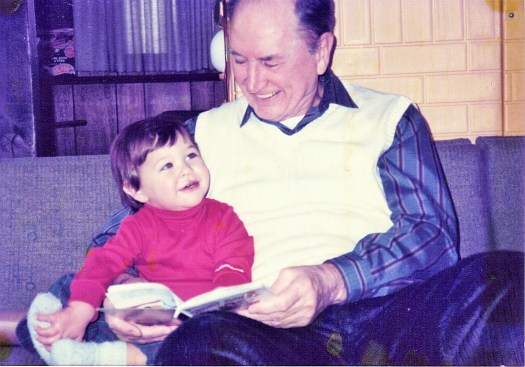
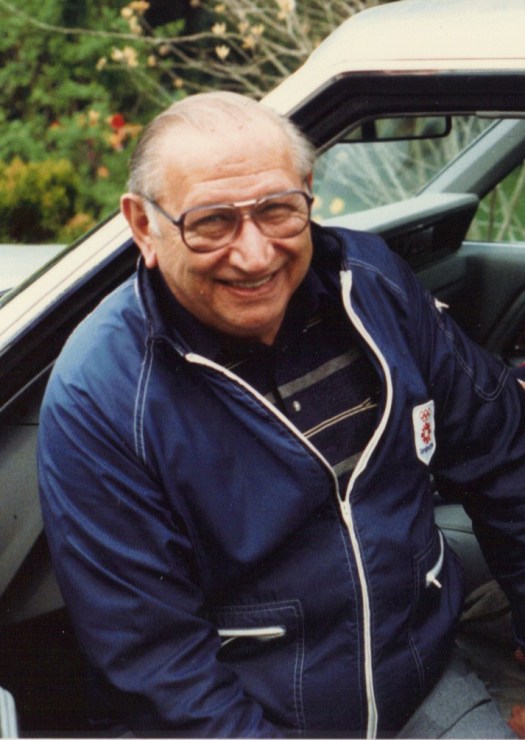
b with grandad

My dad with one of his grandsons

BY KATHY P. BEHAN

Today it’s tough being a dad. It’s not like the old days when a man was considered a good father simply because he brought home a good paycheck. Men can’t get off that easy anymore.

Fatherhood is no longer a spectator sport. Men are expected to participate in every aspect of their children’s lives. Along with changing their kids’ diapers, they’re changing their offsprings’ perceptions of what it means to be a man, and more specifically, a father. That’s why today’s dads usually have to forge their own path through the fatherhood jungle. They’re charting new territory because their own dads often took a simpler, less-demanding route.

There are some exceptions. My dad, for instance, was a “hands on” father long before it became fashionable. He showered my sisters and me with his good humor, love and attention. Sure, he helped with our “maintenance,” but he also had a deep interest in what we were all about. He talked to us about (almost) everything, and made sure we knew we could always come to him no matter what.

He had high standards too, encouraging us to pursue any educational or occupational dream that we had. This was fairly revolutionary since except for him, we were a household of females in the 1950s, and the feminist revolution had yet to take place. My dad probably knew the importance of encouragement because he didn’t get any from his childhood family. Despite this, he still managed not only to make it through college, but also through law school at night.

But that’s not what I find most remarkable. I’m most impressed that my dad was able to give us such unconditional love and support without having received these benefits himself in his youth. Despite a Dickensian childhood filled with poverty, the death of his mother, being placed in an orphanage, and adjusting to life in a foreign country, he was able to create, what one of my cousin’s dubbed a “Father Knows Best” family.

He was a great role model not only as a father, but also as a person. He taught us about social responsibility, and the importance of getting involved. Over the years, I’ve watched in admiration, awe and occasionally fear, as my father intervened in situations where others just stood in shocked immobility. He’s offered assistance and comfort in a wide range of situations, sometimes even putting himself in physical jeopardy in the process.

I’ve seen him break up fights, come to the aid of a child being physically abused by his mother, and help a man having an epileptic seizure. No, my dad’s not a policeman or a physician, he’s just a concerned, caring individual who thinks it’s everyone’s responsibility to help people in need.

There’s one incident that really stands out in my memory. While driving me home from a party, he told me to be on the lookout for a woman he had passed on the side of the road. We spotted her moments later plodding through the snow in high heels. My father pulled over and asked if she was all right. She burst into tears and the story tumbled out of how she had come to be wandering in the snow, late at night. “He just left me at the restaurant,” she tearfully explained, “and I didn’t have enough money for a cab.”

It seems her date deserted her because she wouldn’t consent to sleep with him. Getting back home was a problem not only because of her financial situation, but because she didn’t want to disturb her mother who was babysitting her young son. Without hesitation and despite her protests, my father delivered her safely to her door a full 40 minutes out of our way. That woman undoubtedly saw the seamy nature of man that night, but thanks to my father, she also saw the good side as well.

My dad isn’t perfect. He tends to categorize us, and has a hard time seeing us in a different light. For instance, I was the “party girl” who didn’t take school or anything else, for that matter, too seriously. This was certainly true when I was in high school, but I became much more responsible in college. However, my dad experienced a time lag in his appraisal of me. I think it was years later, maybe after the birth of my third child, when he realized I was no longer so flighty.

At times, he could also be pretty patronizing. Even though he taught us to think for ourselves, and encouraged us to pursue even a traditionally male occupation, he’d also say things like, “You’re too pretty to be upset.”

On the whole though, I think his track record is pretty remarkable. So on Father’s Day, my thoughts turn to my dad, and all the other men who have done their most important job well — being good fathers.

Like it or not, kids look up to their dads more than anyone else. They’re the true everyday heroes who have a unique place in our lives. We come to our fathers for so much more than just the proverbial allowance and car keys. Dads are the ones we run to first for fun, for approval and for help. No one makes us feel as safe, or as loved.

So Dad, even though there are lots of other people in my life, no one can ever take your place in my heart.

Happy Father’s Day!

Kathy P. Behan, a mother of three, is a nationally published freelance writer, specializing in health and family issues.
Can’t Really Prepare for Death

Uncle Mike Uncle Mike

By Kathy P. Behan

My uncle died suddenly. Though he was overweight, a smoker and in his early 70s, I never seriously contemplated the possibility of losing him. He was just… always there.

My uncle was really important to me. Part of the reason was that we spent so much time together. When we were little we lived in the same apartment building as he did. But even after we moved into a house in the ‘burbs, we’d continue to see him and my grandmother every weekend until we were in high school.

He loved my sisters and me without question or qualification. He took enormous pleasure in even our most modest accomplishments and would regale his friends — and anyone else he could strong arm — into listening to our latest coups. For instance, when one of my children was born, Uncle Mike had his friends at the bank flash this news on their electronic billboard. Another time, he sent away for the Phi Beta Kappa key that my older sister never wanted, so he could have it mounted in his office. He also kept my younger sister’s college mug from an Ivy League school (“Buy me the biggest one they got!”) prominently displayed.

Uncle Mike was an amazing character, full of fun and good humor. I can never think of him without smiling. He taught me how to play (and cheat at) poker, how to swallow a pill (even though he couldn’t) and how to prepare some of his favorite dishes (he was a fabulous cook). He’d insist that we always wear life preservers on his boat, though in fact, he was the only one who couldn’t swim. And while I was away at college, even though he wasn’t big on letter-writing, he would faithfully send me quick notes, and enclosed in each, a $20 bill.

He was an avid photographer and took an endless stream of photographs of myself and my siblings. When we’d grumble about having to rebrush our hair, or to stop what we were doing for a Kodak moment, he’d say, “You may complain now, but you’ll thank me later.”

After he moved to North Carolina and our regular visits were replaced by regular phone calls, I looked forward to our weekly conversations (even though he’d somehow always manage to call during dinner). He continued to call me regularly even when we lived in Europe. I could always count on his phone calls, but more importantly, I could also count on him. That is, until two days after his 71st birthday, when he died of a massive heart attack.

I don’t think that you can ever really be prepared for death. Even after a prolonged illness, there’s always shock, and the full meaning of the loss comes afterward. But sudden death brings its own unique brand of torture. There’s so much unfinished business. You don’t get to say goodbye, or to apologize for all the real or imagined slights that build up over a lifetime. You’re haunted by all you did, and didn’t do. You want one more chance to set the record straight. To tell the person how much you appreciated and loved them. To say these words not to everyone else, but directly to the person you love.

More than anything else though, I just want to see my Uncle Mike one more time. I feel his loss most around holidays, or when I come across something that reminds me of him. My birthday was really hard for me this year because for the first time ever I celebrated it without hearing Uncle Mike sing me a rousing chorus of “Happy Birthday.”

By conventional standards Uncle Mike probably wouldn’t have been considered very successful. He never made or had a lot of money, or a job that he could brag about. In the most important sense though, my uncle truly was a success. He made his mark on the people around him. He had family and friends who truly loved him, and miss him very much now that he’s gone.

Kathy P. Behan, a mother of three, is a nationally published freelance writer, specializing in health and family issues.

The World of Parental ‘Guilts’

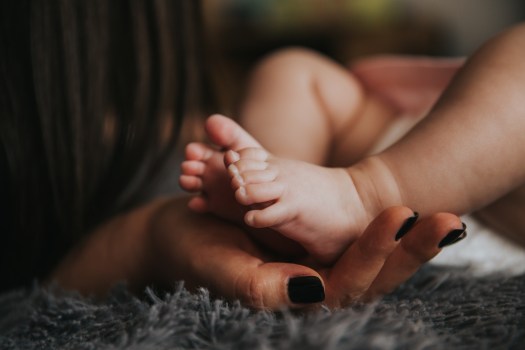
mom with baby's toes

By Kathy P. Behan

I first felt the icy pangs just a day after becoming a mother. I had walked into the hospital’s nursery and went directly to a baby I thought was my newborn son. He wasn’t. The room was filled with infants who with their scrunched-up faces, tight fists and warming caps looked more like each other than they looked like the parents who had conceived them. That’s why intellectually I knew this was an easy mistake to make, and yet in my heart, I felt as if I had betrayed my son in some fundamental way. After all, I couldn’t even pick out my own child! I had to read the name tags on the bassinets in order to tell which baby was mine.

Thus began my not-so-pleasant initiation into the Wide World of Maternal Guilt. Since that day, on occasions too numerous to note, I have run the gamut from “guilty” twinges to out-right convulsions. The mild guilts are almost a daily occurrence. For instance, while I’m sorting clothes and in the middle of doing laundry, and I hear, “Mom, can you play with me?”

My first reaction is always the same — TWING, a little stomach flutter, accompanied by a nagging internal voice saying, “Play with the kid. Obviously you’re not spending enough time with her.”

Then REASON steps in, “You’ve just finished playing Candy Land for the 200th time, and you have no clean underwear. Tell the kid to take a hike.”

Moderate guilt is more painful, but luckily, less frequent. It usually involves the “should’ves” — as in: “I should have checked his homework,” or “I should have read to her instead of letting her watch T.V.”

It happens because we want to do what’s best for our children. We identify so strongly with our kids that we often take on their disappointments and failures — and we usually manage to take the blame for them.

The worst kind of guilt, the real gut-wrenching variety, is when we truly let our kids down. For me this is how I feel when I yell at my children. I come from a long line of shall I say, excitable people. So when the going gets tough, our volume goes up. Big time. Even though I try to keep my cool, all too often it melts in the heat of the moment. When that happens, I literally feel terrible. However, it does serve as a physical reminder of my parental shortcomings.

The tug-of-war between trying to do what’s best for your child while still maintaining your own life (and sanity) is one of the hallmarks of parenthood. There are many variations on this theme: the to-buy or not-to-buy syndrome; the need to get things done vs. playing with the kids; the desire to be alone vs. being trailed around the house by small non-stop-talking people; the list is endless.

Parents are set up for all kinds of frustrations. And because our children are so much a part of us, sometimes we forget where we end, and they begin. These factors make us extremely susceptible to parental guilt. The trick is to be able to tell the difference between well-deserved from imaginary guilt. For example: You’ve hired a babysitter for the evening. When you mention this to the kids they erupt with complaints. “We never get to see you!”

Now, if you and your husband have just spent the entire day at home with the kids, and haven’t been out alone in three weeks, a tiny TWING is all you should feel. But if you and your husband haven’t been with the children in a long time, the guilt alarm bells should be sounding off loud and clear. This is the call to take corrective action.

Sometimes it’s easy to tell the difference between real or imagined parental culpability, but all too often the line is blurred. That’s when it’s best to stand back from the situation, and try to appraise it objectively. Yes, you might have had a hand in contributing to the problem, but don’t lose sight of your child’s involvement in it as well.

Other times your guilt may be completely unjustified, and you’re wrong to put yourself through the wringer. Remember that just because you feel guilty, doesn’t necessarily mean that you are guilty. (You know, like the way you feel when a policeman pulls up next to you at a red light?) This feeling is just a normal though unpleasant part of parenthood.

The good news is that ultimately guilt can help you become a better parent. After thoroughly evaluating those twinges, learn from them. If you deserve to feel guilty, change your behavior. Guilt can motivate us to strive harder to be wiser, better and more patient.

I’m never going to be a perfect parent no matter how hard I try. But the guilts help keep me on the right track.

Kathy P. Behan, a mother of three, is a nationally published freelance writer, specializing in health and family issues.

Toilet Training Makes Mom a Prisoner

baby-boy-hat-covered-101537BY KATHY P. BEHAN

Now I know how the prisoner of Zenda felt. No, I’m not incarcerated in jail — worse, I’m held prisoner by the whims of my almost three-year-old’s bladder. We’ve begun that age-old parent breaker known as toilet training. This is a test to see whose will is stronger, the parents’ or the child’s (Always put your money on the kid). We were supposed to go shopping this morning, but when venturing out with a child who can barely manage to “put his pee in the pot,” I’m loathe to take a chance on a number two accident (and Brendan’s currently four hours past his usual pooping time).

By all rights, Brendan and I should find this particular right of passage a breeze. After all, I’ve been down this road before with son number one. And because of Cullen’s willingness to show his brother the fine art of “whizzing” (his favorite name for it), and has caught on to our praise-Brendan-like-crazy-when-he-does-it correctly ploy, you’d think the little guy would, if you’ll pardon the pun, aim to please.

No such luck. This kid is the personification of the Italian expression gabadost, meaning stubborn (literally hardheaded). And like the Burger King jingle he’s got to have it his way. His way, depending on his mood, means indiscriminate peeing wherever and whenever the mood strikes.

In my heart, I know he’s not out to get me. After all, parents throughout the centuries have been turning themselves inside out trying to get their offspring to perform the most natural of biological functions in the correct location. They probably struck out a lot too. But at least you can’t blame us for lack of effort. Along with the “praise the successes” method, we’ve also tried various types of bribery — stickers, candy bars, big boy underwear with his favorite cartoon characters on them, even cold hard cash, without much luck.

I hate to admit it but I think it’s time to retreat. Brendan will be ready when he’s ready, and there’s no sense driving us all crazy in the meantime.

Wait. What’s this. He’s running toward me clutching his crotch and yelling, “Quick, I need to pee!”

I rush him to the toilet where he performs perfectly and then walks nonchalantly back into the playroom.

Kathy P. Behan, a mother of three, is a nationally published freelance writer, specializing in health and family issues.

Teaching Kids to Stand Up for Themselves

child-dad-daughter-139389By Kathy P. Behan

When my sister was about 6 years old, my father gave her a $5 bill and asked her to buy him a newspaper. She obligingly went into the store and came out with the paper and some change. After counting the change, my father discovered that she had been shortchanged a dollar. He told her to go back to the cashier, explain what happened, and get the correct change.

Mona didn’t want this assignment, and tearfully tried to talk my father into doing it himself. Dad was unmoved.

“You have to stand up for yourself,” he patiently, but firmly explained, and headed her back into the store.

After a few minutes, she triumphantly returned with the dollar bill.

My dad taught my sister a valuable lesson that day, and it’s one that we all have to learn. It’s easy to be taken advantage of, the hard part is knowing when, and how to put a stop to it. If you’re successful, you feel good about yourself. You get a sense of satisfaction and pride. The problem is how you feel if you don’t take action. You get mad at yourself and may feel hopeless, and even worthless. You may believe that you don’t have control of anything, and are a hapless victim of the world around you.

Standing up for yourself doesn’t mean being strident or intractable. You can make your point in a polite and calm manner. Don’t declare war from the get-go. After all, everyone makes mistakes so it’s usually best to give the person the benefit of the doubt, and make your case from that perspective. And just because there are some crummy people out there, it doesn’t mean that you should constantly be on the lookout for them, or always gearing yourself up for a fight.

When my oldest son, Cullen, was a kindergartner, there was a third-grade bully on his bus. Along with other taunts, this kid would hurl four-letter word insults at Cullen.

One day my son came home from school with a very satisfied grin on his face.

“I got him back,” Cullen cheerfully explained. “When he was done calling me bad names, I looked him right in the face and insulted him.”

“What did you say,” I asked.

“Four eyes!” was his quick and enthusiastic reply.

This was his burning insult? Well, the kid did wear glasses. But of course, that’s not the point. It really wasn’t all that important what my son had said, it was just that he had had the gumption to say anything. He stood up for himself, and so the bully ended up leaving Cullen alone and sought out easier, less confident prey.

As a parent, you want to protect your children from all the bullies and unpleasantness of life. You want to fight every battle for them, and right every wrong. But obviously this just isn’t possible. Nor is it the best way to help your kids.

What’s better is to arm them so they can take care of themselves. Their best protection will be a good and healthy respect for themselves. Because they like themselves, they’ll expect to be treated well and fairly. They’ll know they’re worthy of other people’s consideration and friendship.

So, as in my father’s case, sometimes the best parenting has to be done behind the scenes. After giving encouragement and advice, at times, you have to stand back and let your child confront a problem alone. But as with my sister, even though she faced off against the cashier by herself, she also knew that my father was behind her all the way.

Kathy P. Behan, a mother of three, is a nationally published freelance writer, specializing in health and family issues.