Mom’s College Daze

C's hs grad

Cullen at his high school graduation

By Kathy P. Behan

Looking back, I always knew that I’d be devastated, but I couldn’t imagine the extent. After all, our son was just going through a common rite of passage, one that we had invested a lot of time, energy and money into. It was the fulfillment of a dream that we all shared. Our firstborn was headed off to college. Knowing that his departure was imminent, I went into a kind of mourning right after his high-school graduation. I couldn’t keep my eyes dry. I cried at every commercial, song, and TV show that even hinted at a child leaving home. I practiced my saying-goodbye-with-dignity scenario, over and over in my mind. But to put it bluntly, I was a wreck.

There was a lot to miss about Cullen. After all, this was a child who was larger than life, and always made his presence known. I’d often refer to him as being from the in-your-face school of childhood. You know, the kind of kid who always demanded your attention. “Look at me, Mom!” “Watch me now!” “What should we play next?”

As Cullen grew older, his need for us diminished. But he had trained us a little too well. Now, we couldn’t take our eyes off him.

As his departure approached, Cullen’s excitement grew in direct proportion to our dread. I knew that this was healthy and as it should be, but these thoughts weren’t comforting. I counted the days, then the hours, then the minutes until his send-off.

When the day finally came to drop him at school, I was in a functioning but shaky state. After unpacking his belongings in his dorm room, I was attempting to put his suitcase on top of the closet, when a rain of debris came down and some of it went into my eyes. Now I was crying nonstop.

Ironically, my injury made it much easier to say goodbye to my son. I was in so much physical pain that I couldn’t really focus on my psychological grief. We drove straight to the hospital from Cullen’s dorm. My cornea turned out to be scratched in several places.

In the days that followed, I was gradually able to make peace with Cullen’s departure. Yes, I thought of him often, and I had to resist the urge to call and text him constantly. It was especially difficult to walk by his empty room. I couldn’t decide if it was easier to leave his door closed so I could pretend he was still inside, or open, and try to ignore his absence.

Since then, we’ve had to endure our other son’s and daughter’s departures for college. My daughter is set to leave again in a few weeks. By the way, it doesn’t get any easier. Each child’s absence is a different type of hell. But what really is a comfort is knowing that when they’re in college, the kids are having the time of their lives. Yes, they’re working hard and learning a lot, but they’re also making lifelong friends and hopefully, taking full advantage of all that the school offers. It has been clear that my children have been thriving in this new and exciting environment – and that has been very helpful in my “recovery.”

Kathy P. Behan, a mother of three, is a nationally published freelance writer specializing in family and health issues. 


Parenting Teens

Pat's_Family_Photo doctoredBy Kathy P. Behan

Seems like only yesterday. Tires screech. It’s midnight on a stormy Friday night. My heart is only able to slow its frantic beating when it dawns on me that for various reasons, my three children are all safe at home. Do you know where your child is? Well, if he or she is a teenage driver, you might not.

When kids gain the ability to drive, parents lose the ability to track their children’s exact whereabouts. Even if the kids are highly reliable, unless they’re also wearing a homing device, there’s no guarantee they’re where they said they’d be.

The loss of parental control, to put it simply, stinks. For me, motherhood changed from being a very black-and-white profession, to one tinged grey. When my kids were young, I always knew where they were cause I had to bring them there. Plus, my parenting mission was clear. Good mothers breastfed their babies, set up consistent rules, belonged to playgroups, encouraged academics, and always talked reasonably and age-appropriately to their kids. My children were big, bright, healthy and happy so it was easy to think I was doing it right. But when they entered the murky waters of teenagehood, the path was obscured.

I missed the days of being smug and secure in my parenting. Yes, it’s important for kids to become independent, and yet where should the line be drawn? In their teens, they seem to try to weed parents out of their lives. They guard their privacy as if they’re protecting state secrets. Even the most basic questions such as “Where are you going?” and “Who will you be with?” are often met with resentful snarls. But that doesn’t mean they should get away with it – it just means Game On!

As determined as our kids were to keep us in the dark, we were even more relentless in our efforts to stay enlightened. Parenting these occasionally surly individuals seemed to involve a lot of fishing. Fishing for information about what was going on in their lives. Fishing for clues as to what they were really thinking and doing. I’m glad that even though they tried to swim away when they were teens, we were bound and determined to reel them back in. And after awhile, they got with the program. They told us what we needed to know and often, opened up about a good deal more.

The net result is that now that they’re older – all in their 20s – we’re closer than ever.

Cody’s Tale (Tail?)

DSC00146 (2)

By Kathy P. Behan

Awhile back, I was facing a milestone birthday. Nothing like one of those to make a person take stock. Yes, I had a great husband and three amazing kids, but there was still one thing I had always longed for – a dog. For me, it was a bit more complicated to get a canine companion because unfortunately, I’m allergic to dogs. Undeterred, I decided that it was time to find out if I could make my wish come true. I was convinced that I’d be able to find if not the perfect pet, at least one that wouldn’t make me too sick.

The first step was to do some research. I learned about “hypoallergenic” breeds and was encouraged by this tantalizing concept. I pored through books at the library and on weekends, visited kennels of promising pets. My husband was the only person I confided in about my not-too-practical plan. He knew I was doing “research” when I’d show up hot pink, welt-covered and swollen after one of my visits.

Just when I was about to give up, I chanced upon a litter of schnoodles (schnauzer/poodles). One of the traits that made them so attractive to me was their looks. Many of the so-called hypoallergenic breeds looked a little too precious, like delicate, temperamental, froufrou creatures. But schnoodles, ah, they resembled rakish, devil-may-care, unmade beds and, they had attitude.

There were four in the litter and I sat amongst them letting them climb all over me. I rubbed my face into their fur and checked my skin after their licks. For the first time in all my days of testing, I only had a minor allergic reaction. Suppressing my elation, I put them through some puppy tests that I’d read about, and carefully made my selection. The first one eliminated was the male the staff referred to as “Mr. Energy.”

The next day, I took my husband to meet the schnoodles and triumphantly showed him my pick. After playing with them in turn, he said, “No. I want that one. He seems to be the healthiest!”

He was pointing at “Mr. Energy,” who was wildly hopping up and down in his pen. I was so thrilled at the prospect of finally being able to have a dog, that I immediately agreed. And the breeder, knowing my situation, promised to take the puppy back if my allergies flared up.

Just to be on the safe side and prevent some broken hearts, when we returned home we decided it would be best to fib to our children. What if it turned out that I couldn’t tolerate the pet’s dander? The children would be devastated, and so I told the kids that I was baby-sitting the dog for a friend.

When it became clear that despite spending the whole day with the puppy, I remained remarkably allergy free, I couldn’t wait any longer and gathered the kids together to tell them the good news – “Cody” – as I decided to name him, was ours.

That was the beginning of what would be a 15-and-a-half-year love affair.

More “tails” to follow…

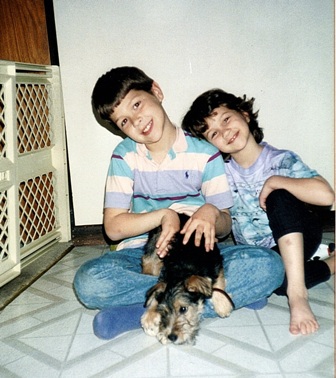
Twelve week old Cody with two of his ecstatic new owners, Brendan (left) and Taryn.


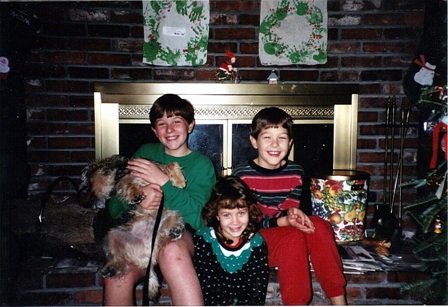
Cody’s on the move in this Christmas-card outtake with Cullen (left), Taryn (center) and Brendan (right).


Women Bashing

cousins (2)

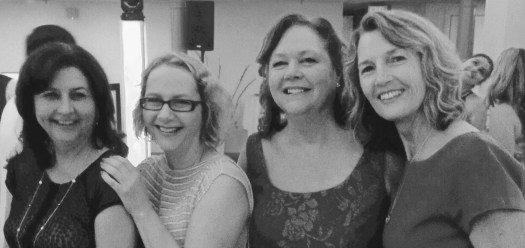
Kathy (second from right) and some of her favorite women (l to r) sisters Mona, Maria and cousin Mary

By Kathy P. Behan

When did it ever become acceptable, even fashionable, to bash women? I’m sick of hearing about “mean girls” and lines like, “Well you know how catty women can be.” It’s common to hear otherwise perfectly-mannered people making these comments. You can bet if these sentiments were directed at a religious or ethnic group, there’d be a public outcry and our “PC” culture would pressure the offenders to hold their tongues.

Why is insulting women fair game? You can say whatever you want about them without reproach. Why? It’s not so much that women bashing is new, it’s probably been around as long as women have. But what is new is the popularity and arrogance of the position to impugn them. And frankly, since we’re inundated with images of women behaving badly on reality shows such as “Bridezilla,” and all those ridiculous “Housewives” programs, everyone is all-too-familiar with vile females. These women put the “b” in “witch.”

Not surprisingly, these images are having an effect on our society – and it’s not for the better. But what’s most heartbreaking is that these slanderous lines are often uttered by women to women. That’s what’s so hurtful. Many women promote, or at least, tolerate their own denigration.

Even worse is when a woman proclaims, “Women tend to hate me, but I get along really well with men.” These dopes honestly think this somehow raises their stock. A person like this is probably telling the truth though – I’m not sure about the men liking her, but I can bet that she’s not a female favorite. The reason is obvious. She has a hard time with women because they see right through her. Sorry, but I think it’s often much easier to fool men.

Ironically, women may have gotten a bad reputation because they possess a positive trait – they’re good character judges. The average woman is a master at reading people, and she can obtain, and assess personal information in a surprisingly short period of time. This ability can be good or bad news. Because women have the inside track on what makes someone tick, they know what to say or do to get closer to them, or to get under their skin. That’s why depending on the circumstances, women can use their “power” for good or evil.

I know women are not all saints. I know some who are first-class phonies, difficult divas or just plain malicious. But my best friends are women. The support, encouragement, affirmation and conversation that I routinely get from my female relatives and friends is what helps keep my emotional boat afloat. Men are great, but when you’re having a quintessentially female experience – being pregnant or going through menopause, for instance – no matter how wonderful the man or men are in your life, you need a woman to really understand and relate.

Badmouthing women is toxic. I’m worried about the toll these negative statements are taking on my daughter, and everyone else’s daughters. They’re getting the message loud and clear that other women are the enemy. Females can’t be trusted so watch your back. Not only is this detrimental to their own self-esteem and sense of well-being, it’s also dead wrong. No one nurtures and knows you as well, and watches out and fights for you as hard, as the important women in your life.

I get along really well with women. And you can bet, I’m very proud of that fact.

Kathy P. Behan, a mother of three, is a nationally published freelance writer, specializing in health and family issues.


Teaching Children to Think of Others

kids - 5 yr old bBy Kathy P. Behan

One concept that I’ve always had a particularly hard time with is that life isn’t fair. Oh I know that in reality the good guy doesn’t always win, and similarly, the bad guy doesn’t always get exposed as the creep that he really is. But I don’t like it. It bothers me — a lot.

Most children agree with me. They often have a highly developed sense of fairness, especially when it comes to their own rights. They’re particularly conscious of whether or not they’re getting “theirs.” The rub, of course, is that as parents, we also have to convey the belief that they should be concerned about other peoples’ treatment as well.

A lot of parents do a great job getting the fairness message across to their children. But all too often, there are others who don’t. Maybe they figure that as long as their kid is getting his share, that’s all that really matters. This kind of parent is usually easy to spot. For instance, they’re the ones who always let their kids win at any game they play.

In a misguided attempt to protect their children from disappointment, they inadvertently teach their kids that rules are for other people, and that exceptions should be made for them. They mistakenly believe that they’re doing their child a favor. The ironic part is that these parents are wrong — their kids ultimately lose, and in much more important ways.

For starters, what does a child learn by always winning? (a) Winning is fun. (b) Winning is important, (c) I should always be allowed to win. The answer is all of the above.

The satisfaction of winning is an easy lesson to learn, but children should also be taught how to lose graciously. They should understand and consider how other people feel. Beyond winning and losing at games, being sensitive to another’s perspective is essential to all kinds of relationships. Empathy doesn’t just develop automatically. It’s cultivated, and kids should get plenty of practice.

On the day I was writing this, my middle child gave me a great example of empathy in action. Brendan was telling me about what happened in kindergarten that day. Apparently, all the kids suggested names for the class fish, and Brendan’s name had been chosen (“Tiger,” for his stripes — in case you were curious). As I was congratulating him, he said, “Yeah Mom, I was really glad that my name was picked, but I was also kind of sad, too.” When I asked him why, he explained that there was a run-off between the two most popular names.

“My friend Laura was the person who thought up the other name, so I felt bad for her because her name lost.”

Even though “Tiger” was a clear winner over “Lovie” (Laura’s suggestion), my pride in Brendan had nothing to do with his name being picked.

There are times though, when a me-first mentality does seem to have some benefits. It may help make a person successful at sports, business, or any other endeavor that requires aggressiveness. But when it comes to matters of the heart, these people can be dismal failures. Even though they may be splashy and accomplished, they lack important kindness qualities. That’s why they don’t make very good friends. When push comes to shove, they can’t be trusted. They only care about what’s in it for them. Plus, they may often have a hard time connecting with other people.

Contrast this with a little guy I know named Steven, a 6-year-old who really knows about friendship. Steven was put in a sticky social situation, and yet handled it like a champ. It seems a little boy wanted to be his friend, but the child was always mean to one of Steven’s other buddies. Steven explained to the boy, “I won’t be your friend if you hurt other kids.”

Even though Steven risked incurring the new boy’s wrath, he stood up for his “old” friend, and tried to protect him. Overly-indulged children are often oblivious to other people’s feelings, thoughts and motivations, since so much of their focus is on themselves. But they’re all too sensitive to their own desires. Take Lana for example (her name has been changed to protect the guilty). She was playing a game with some other children where they would take turns jumping from one beanbag chair to another. One little boy took too long jumping onto the next in the lineup . Instead of talking to him about it, Lana jumped directly on top of him, and knocked him to the ground. When questioned, she seemed surprised that I reprimanded her. “He was in my way!” she shouted, fully believing that this justified her behavior.

Not surprisingly, innate selfishness has other negative consequences. Because of their limited thinking, spoiled kids often don’t have a good sense of themselves. After all, their parents are constantly telling them they’re beautiful, bright and the best at everything, so they develop a distorted view of themselves. In their hearts, they know they can’t be as perfect as their parents think, and it makes them confused and unhappy. Because they can’t trust their parents’ judgment, they also have doubts about their own.

This distorted perspective makes it hard for them to be honest. They probably don’t know how. And their dissatisfaction with themselves may lead them to try to make the people around them equally uncertain, and miserable. For instance, take a child I’ll call Kim, who has a lot going for him. He’s good-looking, gifted, and excels at most sports, yet he won’t play games honestly. Even though the odds are good that he’d win most of the time, he cheats and bends the rules in order to ensure victory. His goal seems to be not only to win everything he plays, but to make other kids feel bad about themselves.

After playing a street hockey game, he remarked to one of the boys, “We don’t really like you. We only invited you because we wanted a lot of kids on each team.” It’s scary to consider that this deliberate cruelty came from a nine-year-old boy.

In order to do ourselves, our kids and our world a favor, we have to teach our children to be attuned to others. They must understand that everyone has feelings and that we should all be considerate. It’s in everyone’s best interests to do so. And after all, to do anything else just isn’t fair.

Kathy P. Behan, a mother of three, is a nationally published freelance writer, specializing in health and family issues.